
Murray’s mac and cheese is iconic in New York City. Unfortunately, most of us are not close enough to get to enjoy it ourselves. Murray’s mac and cheese club is the perfect way to get our fix without the plane ticket. Members subscribe monthly to have two delicious mac and cheeses delivered to their door. Murray’s was generous to send me a free sample of their Mac and Cheese Club for a review, and we got to try their September offerings.
Note: Murray’s provided a sample box at no cost to me. Additionally, this article contains affiliate links to products that I love and use to make mac and cheese in my own kitchen. When you click links here and make a purchase from Murray’s, I receive a commission at no additional cost to you. For more information, see my Affiliate Link Policy.
Pasta
When choosing a pasta for mac and cheese, I like to follow a golden rule. The pasta should include lots of ridges to hold onto sauce, and it has to walk the line between too small and too big. Dan Pashman calls this “forkability” and it couldn’t be a more appropriate way to describe it. I want a noodle that will be easy to spear with a fork and not require a ton of work to keep it there.
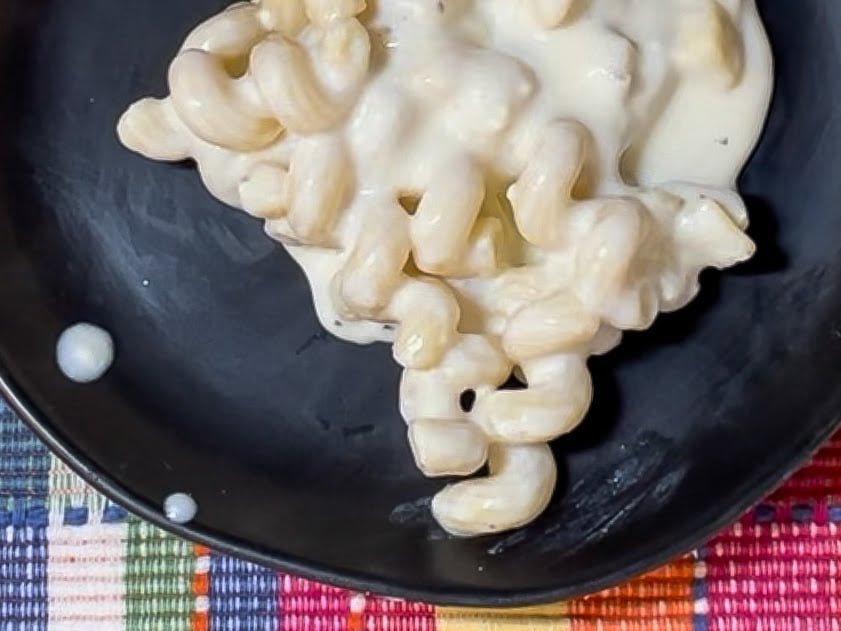
Murray’s uses radiatore in their pasta. These short, chunky noodles are ruffled and offer plenty of crannies to hold onto sauce, and they’re the perfect sweet spot that makes them easy to eat.
I’m generally apprehensive of the pasta texture of prepared and frozen mac and cheese. It makes sense, soaking in cheese sauce makes pasta mushy and it loses all of its valuable texture. Fortunately, Murray’s overcomes it with ease. If I didn’t pull it out of the freezer myself, I wouldn’t have believed it was already prepared. You can check out their pasta choice here (aff link).
Sauce and inclusions
While pasta gives structure to mac and cheese, the sauce is where a majority of the flavor lives. I want it to be creamy enough to coat every ruffly pocket without turning gloopy. Since Murray’s is a cheese company, they set a high bar. Both sauces this month take very different routes to get there.
Murray’s classic mac and cheese
We have to talk about the classic mac and cheese first. Looking at the ingredients, they include a Murray’s cheese blend, mornay sauce (a rich cheesy bechamel sauce), and Parmesan cheese. I don’t know what exactly goes into the Murray’s blend, but it’s creamy and packed with cheesy flavor. This is the stretchier of the two varieties. The classic mac and cheese tastes exactly like you’d expect if you ordered baked mac and cheese from a restaurant. No particular flavors stand out, but they all blend cohesively together and make a great example of what mac and cheese should be. If you want to check out their classic mac without the subscription, you can grab one here (aff link).
Beer cheese mac and cheese
The beer cheese was our favorite of the two. It had a tangy beer note and bright green onions that gave it an edge that the classic doesn’t have. It’s even creamier, and every bite has a little more going on. If the classic is what you’d order as a side at a restaurant, this is the entree you order because of the complex flavors. This one is topped with panko breadcrumbs that crisp up beautifully in the oven.
Heating instructions
Your subscription arrives frozen and bakes at 375 degrees until cooked throughout. If you bake them from frozen, it will take an hour to bake, but if you thaw them in the fridge first you can bake them for 20 minutes. I made a mistake when I baked mine. I wanted to crisp up the top, so I turned on the broiler. The plastic pan the mac and cheese comes in can’t handle temperatures that high and it warped the pan. Not enough to worry about, but enough that I couldn’t store it in the fridge.
Serving ideas
Both mac and cheese varieties would work great as a meal on their own, but I have a few fun ideas for how you could step them up.
- Add a side salad. Since this is a heavy meal, a salad would lighten it up and add some brightness.
- Top the classic with buffalo chicken. This will add some more complexity to balance the richness of the dish.
- Sprinkle some crispy onions across the top of the beer cheese mac. They offer crunch and a pop of extra oniony flavor.
- Serve either with some grilled salmon or another meat to give you extra protein and bulk up the meal a bit.
Is Murray’s Mac and Cheese Club worth the cost?
Each variety Murray’s sends in their mac and cheese club is 32 ounces. That totals out to four pounds of cheesy goodness. You can subscribe for $56.67 per month with a 3 month subscription, making it about $28 per dish. Each tray serves four as an entree or six as a side dish, making it around $7 per serving. When considering what a restaurant meal would cost today, this is a great way to elevate dinner. The unique layered flavors are a bonus.
How does it reheat?
Reheating is my biggest worry with mac and cheese. Will it turn greasy or taste as good as it did fresh? Both the classic mac and cheese and the beer cheese mac and cheese reheated beautifully. Each time, I took a single serving and zapped it in the microwave for one minute and it came out just as creamy and stretchy as it was fresh from the oven the first day. No extra milk required.
Add a fork
Murray’s mac and cheese club is a fun way to get your mac and cheese fix monthly. If I could eat their beer cheese mac every day I would. I can’t wait to see what they come up with next month! Want to try it yourself? Grab a subscription here (aff link) and have your own mac and cheese review.